

How wonderful is it to see your own labels promoted in a Norwegian restaurant or a German wine shop? And to know that that same wine is being tasted in an Italian bistro in New York or a venue in Adelaide?
We all know that reaching beyond borders is one of the greatest satisfactions for a producer involved in B2B wine sales, but we also know how costly and complex it is to achieve.
The questions of B2B wine and beverage sales
It usually all starts with finding a trusted figure available to promote your labels in a specific country, a process that must be repeated for every single market you wish to approach.
But how is this research conducted? Which references would this figure import and which ones would they not? What is the ideal pricing strategy for each reference abroad? How extensively will your bottles be distributed? And, above all, what would happen if no one were available to take charge of your brand?
These are legitimate questions. Finding a contact is possible today thanks to databases and networking, but the real obstacle is not the availability of the contact, but rather the commercial will. It is the harsh law of supply and demand: there are many excellent producers and a limited number of entry channels.
This creates a bottleneck where those managing entry into a country find themselves forced to select only those who guarantee immediate volumes and a quick response in customizing the product for the target market.

A complex gamble
This system creates a frustrating paradox, especially for those who receive direct requests from small foreign businesses that might only want a couple of cases a week, hoping that your wine will soon become a flagship product leading to scheduled orders.
The structural problem is clear: in the traditional model, if you don’t have an intermediary opening the door for you, you don’t exist in that country. Your ability to sell, the quality of your product, and your history become irrelevant if there is no third party who decides to “bet” on you.
Producers thus lose control of their commercial destiny, remaining in a waiting room, hoping to be chosen. This dependency not only slows growth but cuts out entire market segments made up of small orders, niche customers, and passionate restaurateurs who are looking for that specific product but cannot have it because “there is no one to bring it” or, more simply, they do not know where to find it.
A free and independent system
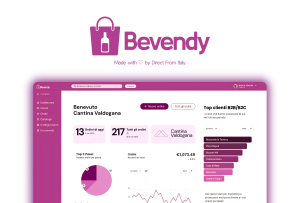
And this is where the concept of B2B disintermediation comes into play. It is not about declaring war on traditional channels, but about complementing them with a new path made possible by technology: the ability to connect and sell directly to foreign businesses, without filters.
In addition to breaking down entry barriers, the great advantage lies in profitability. By eliminating unnecessary intermediate steps, you can avoid the value leakage that occurs along long supply chains: this allows you to retain a much higher margin on each single bottle, transforming even small orders into profitable transactions.
Disintermediation is the tool that breaks the chains of dependency. It means having a digital, logistical, and fiscal framework that allows producers to say “Yes” to that Berlin restaurant that wants 24 bottles, or to that London pub that wants to try three kegs of their craft beer, without having to sacrifice their profit to compensate a chain of third-party actors.

The value of independence
Today’s true competitive advantage is no longer just the quality of the liquid in the bottle (which we take for granted), but freedom of movement.
Commercial independence transforms the producer from a passive subject (waiting for an order from a large intermediary) into an active subject who decides where and how to position themselves. Ceasing to depend on one or more people means being able to build a global brand in a widespread manner, responding directly to market demand.
Free trade allows you to no longer ignore niche requests, transforming every single foreign business into a potential direct partner. This autonomy not only protects your brand identity but ensures that international growth is driven by your own strategy rather than someone else’s logistical priorities.