

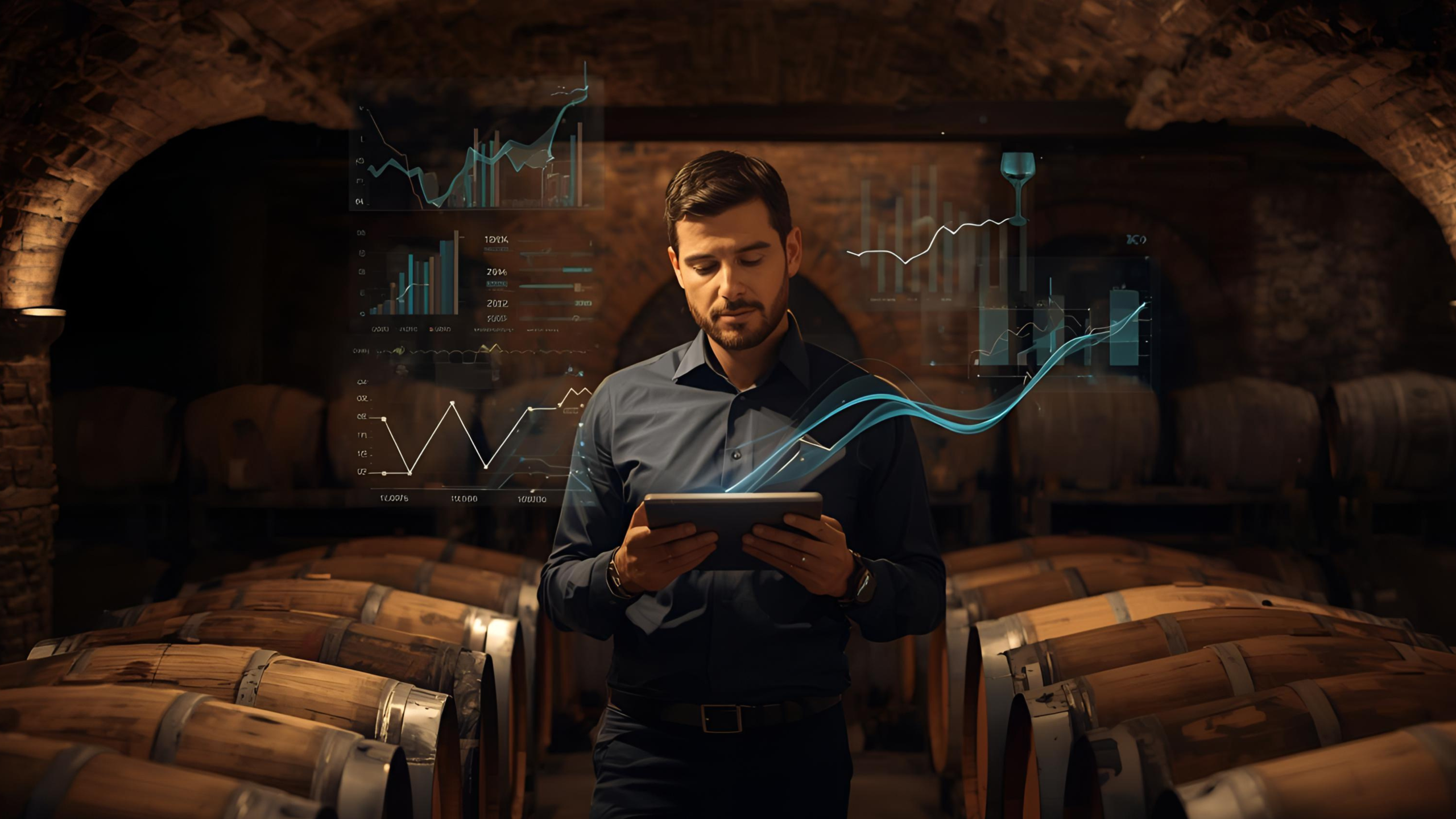
Every operational datum contains a message.
Behind every order, every bottle sold or booking, lies valuable information about the relationship you have generated with your customers in terms of value and purchase preferences, but also about the strategies to adopt.
When management is based on integrated digital systems, this data in the beverage sector is not just for control, but for understanding, anticipating, and growing.
Data that tells a story
A digital system is not just a management tool, but a silent narrator of daily activities. Through the digitalization of operational processes – from the point of sale to e-commerce, up to export – every transaction becomes a source of knowledge.
The most strategic data to monitor:
- sales performance and margins by channel,
- repurchase rate and customer loyalty,
- consumption preferences by product or geographical area,
- purchase timing and seasonality.
Interpreted correctly, these numbers tell you who is buying, when, how much, and why. They are the basis for rapid decisions and a data-driven market strategy.
From informational chaos to useful knowledge
Many companies collect data from different sources (management systems, cash registers, e-commerce, warehouse) without a common language between them. An integrated system harmonizes them, making them finally readable and useful for those who need to make operational and commercial decisions.
In fact, data collection and strategic analysis lead to a deep and mathematical understanding of the best-performing products, the most profitable destinations, and the customers worth investing in further.
With this (and much other) information, the development of ad-hoc pricing and sales strategies becomes simpler and more concrete.

From numbers to relationships
The moment the producer connects directly to the final consumer, data becomes the bridge between sales and relationships.
Understanding which wines they prefer, how often they purchase, which price range they choose, or what type of experience they seek (visits, subscriptions, gifts) allows for personalization of the offering and increased loyalty.
In other words, you build relationships through your bottles.
And the more direct the relationship, the more accurate, useful, and strategic the collected data is.
Data in the beverage sector as a lever for growth
When data management is integrated into the business strategy, every piece of operational information becomes a lever for growth.
From warehouse flows to online sales, everything contributes to improving efficiency, optimizing costs, and increasing profitability.
The result? A more aware, agile, and competitive company, capable of adapting to markets and anticipating consumption trends.
Data is not just for measuring: it is for evolving.
In the world of beverages, where passion meets technology, knowing how to read them means transforming complexity into value.
An integrated digital system allows this to happen naturally, without overhauling internal processes, but by making them smarter and more connected.